
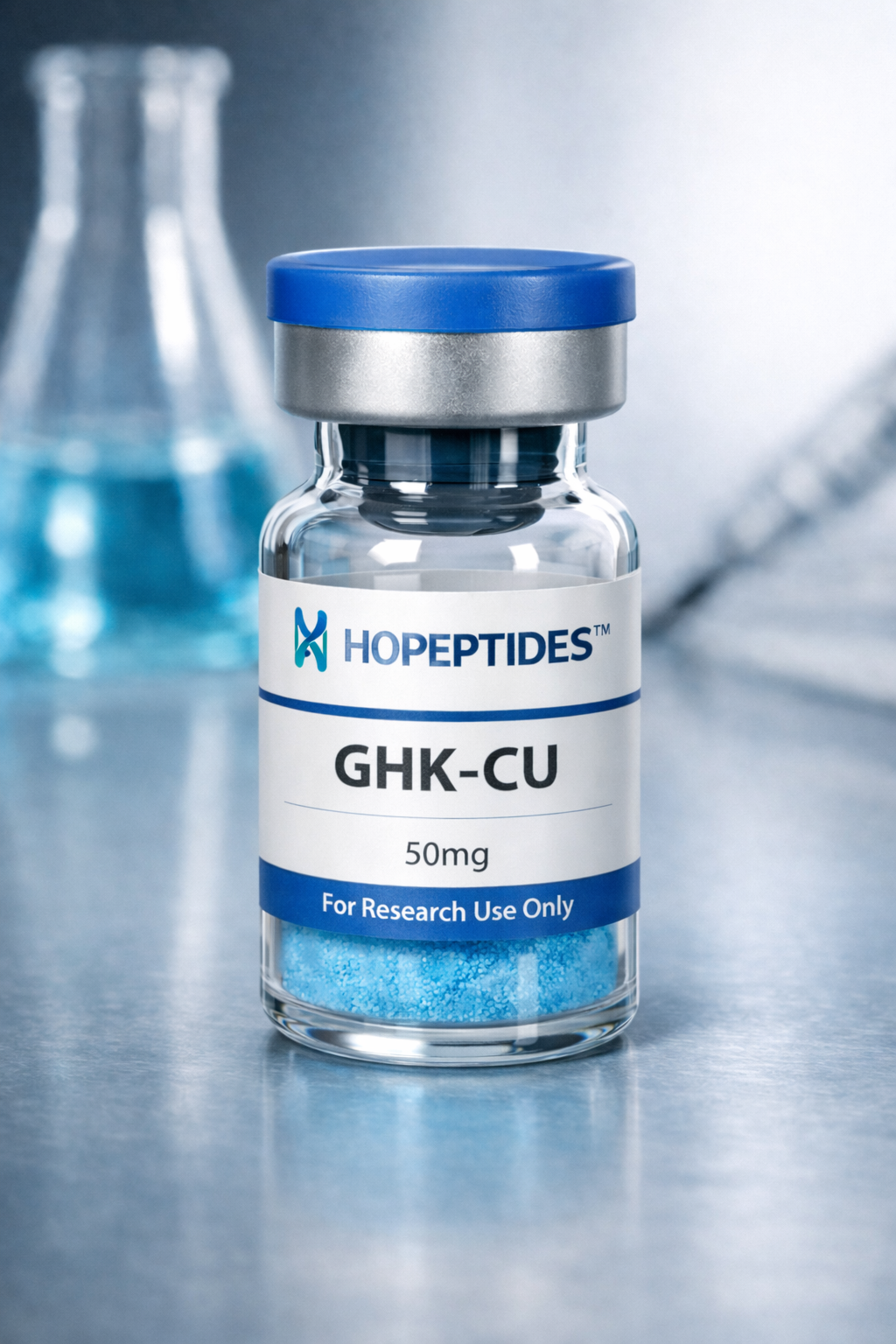
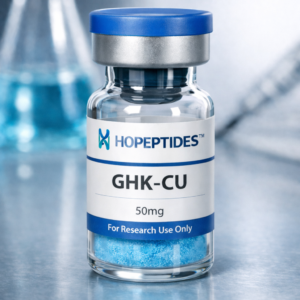
GHK-CU 50mg Peptide (Research Use Only)
GHK-CU (Glycyl-L-Histidyl-L-Lysine Copper Complex) is a naturally occurring tripeptide complexed with copper (II), widely studied in laboratory and preclinical research related to peptide–metal interactions, cellular signaling mechanisms, and biochemical modeling. It was originally identified in human plasma and has since become a common subject of peptide research.
This product is manufactured under controlled laboratory conditions and supplied as a lyophilized (freeze-dried) powder to ensure stability during storage and transport.
Key Product Information
Peptide Name: GHK-CU
Sequence: Gly-His-Lys (Copper II complex)
Molecular Formula: C₁₄H₂₄N₆O₄Cu
Molecular Weight: ~401.9 g/mol
Purity: ≥99% (HPLC)
Form: Lyophilized powder
Appearance: Blue to blue-green solid
Research Applications
GHK-CU is commonly utilized in non-clinical research settings for:
-
Peptide–metal binding and coordination studies
-
Cellular signaling pathway research
-
Laboratory models involving oxidative stress and biochemical regulation
-
General peptide interaction and stability studies
⚠️ Applications vary by institution, study design, and research protocol.
Quality & Manufacturing
-
Synthesized under controlled laboratory conditions
-
Purity verified by HPLC
-
Identity and molecular mass confirmed by Mass Spectrometry (MS)
-
Copper complexation validated during production
-
Each batch supported by a Certificate of Analysis (COA)
Storage & Handling
-
Store at -20 °C for long-term stability
-
Protect from light and moisture
-
Avoid repeated freeze–thaw cycles
-
Handle using appropriate laboratory safety procedures
Important Disclaimer
This product is intended for research and laboratory use only.
Not for human consumption, medical use, diagnostic use, or veterinary use.
This product has not been evaluated by the U.S. Food and Drug Administration (FDA).
Potential Benefits of GHK-CU Peptide
(Observed in laboratory and preclinical research settings)
GHK-CU is primarily valued in research because of its biological signaling role and copper-binding properties. Studies often focus on the following areas:
1. Peptide–Copper Signaling Activity
GHK-CU is a naturally occurring copper (II) complex, making it a useful model for studying:
-
Copper transport and bioavailability
-
Metal–peptide binding mechanisms
-
Trace element regulation in biological systems
Copper plays a role in many enzymatic and cellular processes, which makes this complex scientifically interesting.
2. Cellular Regulation & Gene Expression Research
In laboratory models, GHK-CU has been studied for its involvement in:
-
Cellular communication pathways
-
Regulation of genes associated with structural proteins
-
Cell growth and differentiation signaling
Because it is endogenously present in humans, it is often used in physiologically relevant peptide studies.
3. Antioxidant & Oxidative Stress Models
GHK-CU is frequently examined in oxidative stress research, including:
-
Interaction with reactive oxygen species (ROS)
-
Copper-dependent antioxidant enzyme activity models
-
Cellular defense mechanism studies
This makes it relevant in biochemical and molecular biology research.
4. Tissue Structure & Matrix Research
In non-clinical settings, researchers study GHK-CU in relation to:
-
Extracellular matrix (ECM) regulation
-
Structural protein signaling (e.g., collagen-related pathways)
-
Cell–matrix interaction models
These studies are typically conducted in vitro or in animal models, depending on the protocol.
5. Peptide Stability & Aging Research Models
Because GHK-CU levels naturally decline with age, it is often included in:
-
Peptide aging pathway research
-
Comparative peptide stability studies
-
Endogenous peptide function modeling
Why Researchers Choose Our GHK-CU
-
High purity and consistent copper complexation
-
Batch-to-batch reproducibility
-
Independent analytical verification
-
Secure, research-grade packaging
-
Reliable supply for laboratory and institutional research
Reviews
There are no reviews yet.