
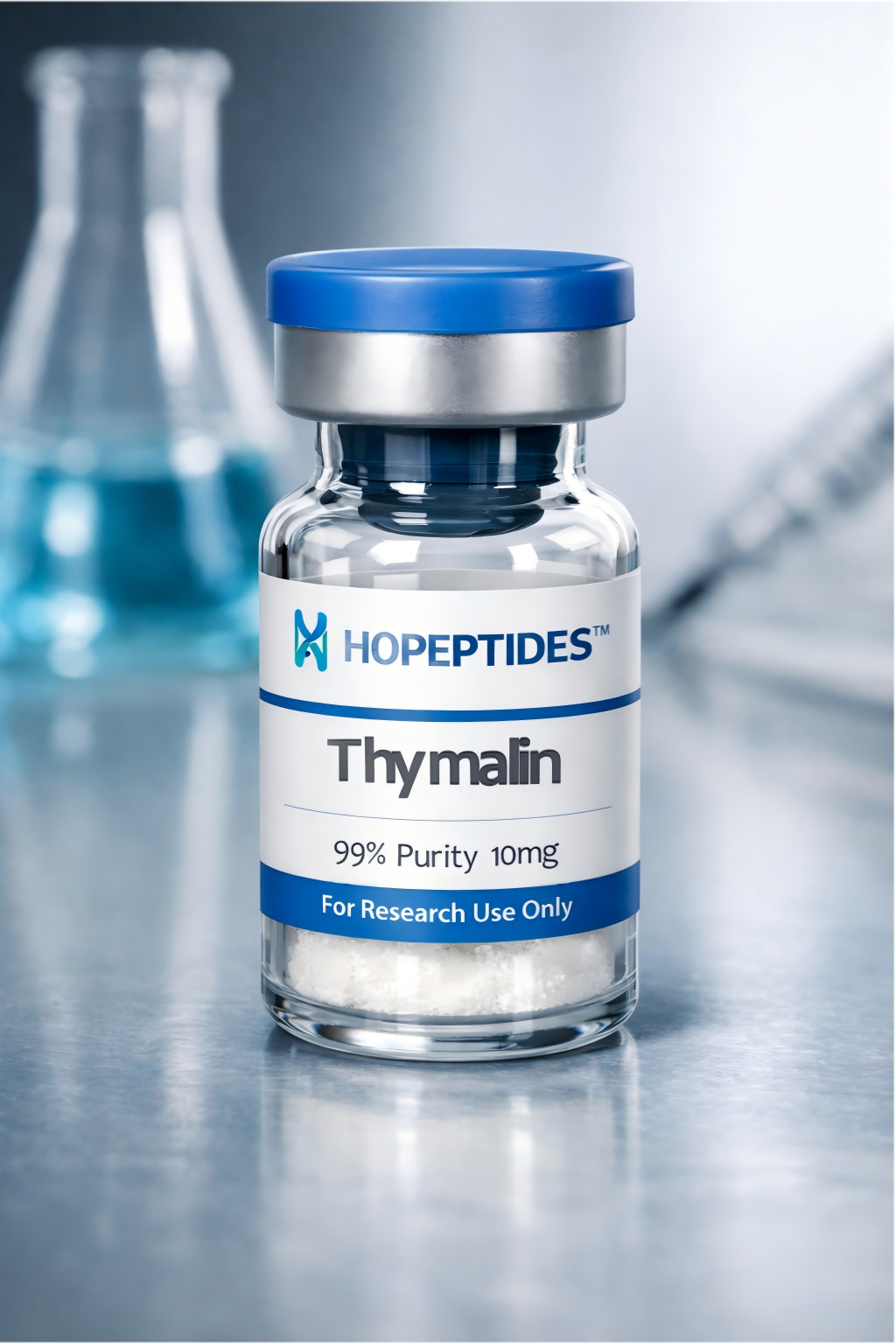
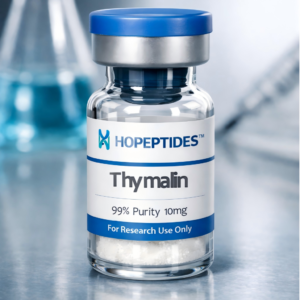
Thymalin 10 mg — Technical Product Information
1. Product Overview
Thymalin is a research‑grade peptide preparation comprised of a mixture of low‑molecular‑weight thymic peptides originally characterized from thymus gland extracts. It is primarily used in scientific research investigating immune modulation, cellular differentiation, and peptide‑mediated regulation of biological pathways.
-
Product Name: Thymalin
-
Formulation: Lyophilized peptide powder
-
Nominal Content: 10 mg per vial
-
Intended Use: For research purposes only (RUO); not for human or veterinary use.
2. Physical & Chemical Specifications
| Property | Details |
|---|---|
| Content | 10 mg peptide per vial |
| Physical Form | White to off‑white lyophilized solid |
| Purity | ≥ 98–99 % (HPLC verified) |
| Peptide Type | Thymic peptide complex (oligo‑/peptidic fraction) |
| Molecular Profile | Mixture of short peptides; major components often include small thymic sequences (e.g., Glu‑Asp‑Pro, Lys‑Glu‑Asp) |
| Solubility | Soluble in sterile water or saline for reconstitution |
| Storage (Lyophilized) | –20 °C, protected from moisture and light |
| Storage (Reconstituted) | 2–8 °C; use promptly and avoid repeated freeze–thaw cycles |
Note: Because Thymalin represents a peptide complex rather than a single defined entity, specific molecular weight and sequence data vary by preparation and analytical characterization.
3. Composition & Peptide Characteristics
Thymalin preparations contain a heterogeneous mixture of thymic peptides, typically enriched for small bioactive sequences derived from calf thymus tissue. These peptides range in length and may include:
-
Tri‑ and oligopeptides such as Glu‑Asp‑Pro and Lys‑Glu‑Asp identified in analytical studies.
-
A range of short thymic factors historically associated with thymopoietic regulation.
Exact component proportions and peptide identities depend on extraction and purification methods.
4. Mechanism of Action (Research Context)
Thymalin’s biological activity in research settings is associated with several cellular and molecular effects:
-
Immune cell modulation: Influences differentiation and activity of T‑lymphocytes, including expression of T‑cell receptor components and cytokine receptors, supporting research models of immune regulation.
-
Cytokine balance: Modulates production of key immune signaling molecules (e.g., IL‑2, IFN‑γ) in experimental systems.
-
Hematopoietic influences: Peptide components have been linked to enhanced early progenitor cell differentiation in vitro and ex vivo.
-
Gene expression: Short peptides may interact with DNA/histone proteins, affecting transcriptional regulation of immune‑related genes in research models.
These mechanisms are subjects of ongoing scientific investigation and are not established as approved mechanisms for clinical therapeutics.
5. Reconstitution & Handling Guidelines (Research)
Reconstitution (for laboratory use only):
-
Prepare a sterile work area and wear appropriate PPE.
-
Add sterile water for injection, bacteriostatic water, or 0.9 % saline to the vial (commonly 1–2 mL, depending on assay needs).
-
Gently swirl to dissolve; do not shake vigorously.
-
Label with reconstitution date/time and concentration.
-
Store reconstituted solution at 2–8 °C; use within a limited timeframe per institutional protocol.
Handling:
-
Follow institutional biosafety and hazardous material guidelines.
-
Avoid introducing contaminants or repeated freeze–thaw cycles.
-
Dispose of unused solution per laboratory hazardous waste protocols.
6. Research Applications
Thymalin is commonly used in scientific research exploring:
-
Cellular and molecular immune regulation pathways.
-
Experimental models of aging and immunosenescence.
-
Studies of thymopoiesis and lymphocyte differentiation.
-
Investigations of peptide‑peptide and peptide‑DNA interaction dynamics.
7. Safety & Regulatory Notes
-
For research use only (RUO) — not approved as a pharmaceutical, therapeutic, dietary supplement, or clinical diagnostic.
-
Not for human or animal administration.
-
Users must adhere to applicable institutional and legal restrictions on peptide handling and experimentation.
Reviews
There are no reviews yet.